HOW TO USE IT
About the new year resolution template
Most New Year's resolutions fade by February, usually not for lack of willpower but because "get healthy" or "save more" never turns into a specific plan. This template walks you through the parts that make a goal stick: a clear, measurable goal, the reason it matters to you, the very first step, a date to check in, and a plan for what is most likely to get in the way.
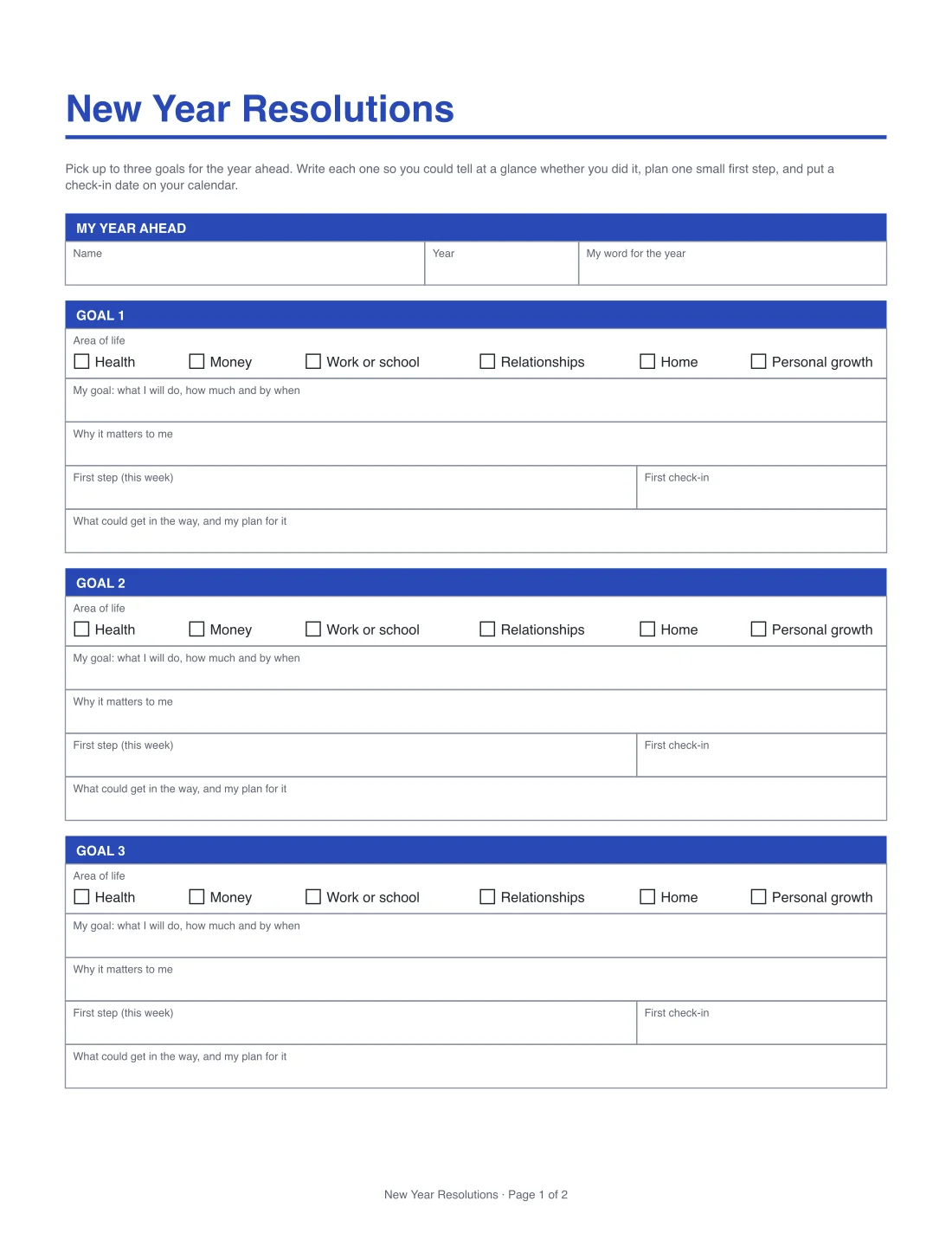
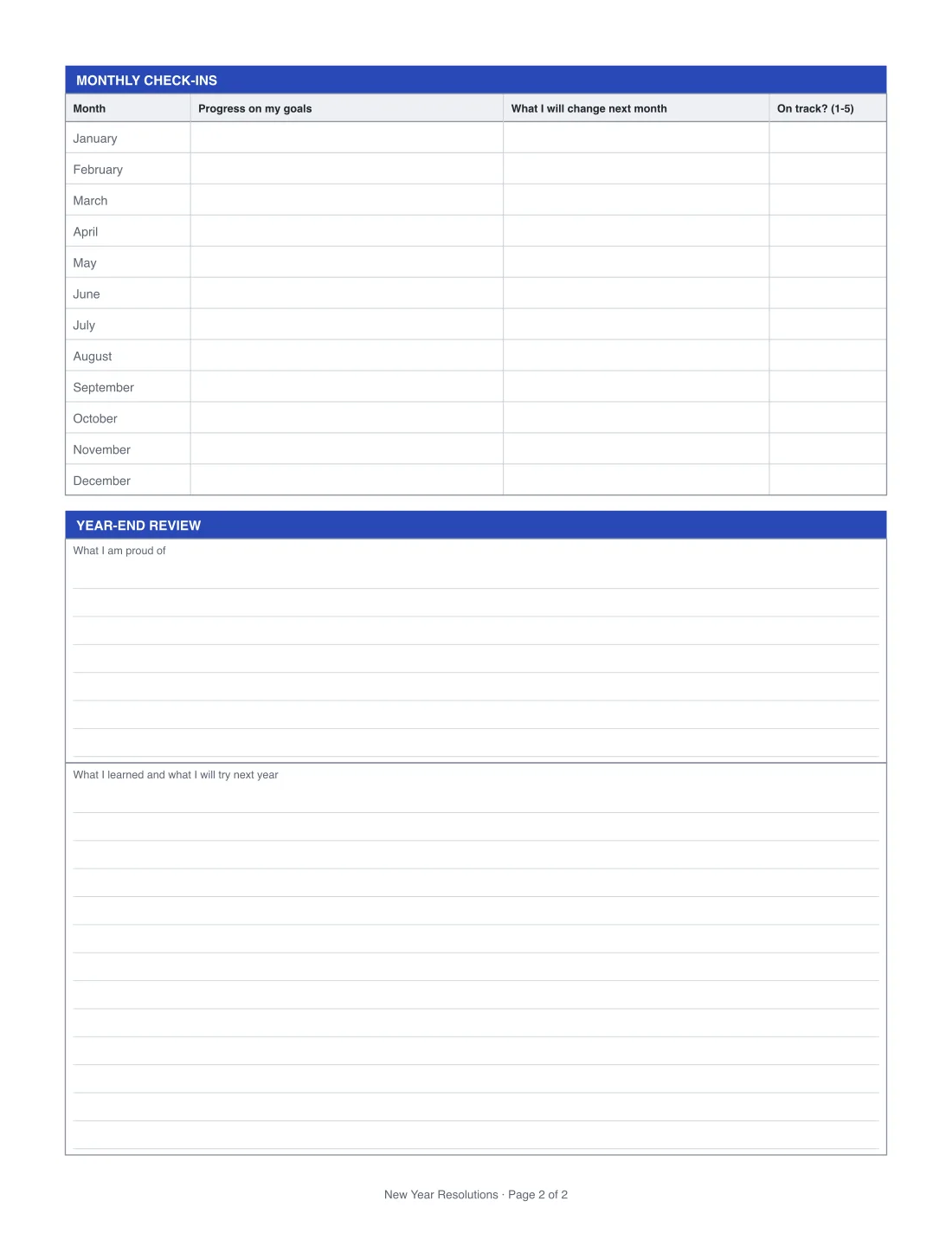
Page one has room for three goals, each tagged with an area of life (health, money, work or school, relationships, home or personal growth) so you can see at a glance whether your year is balanced. Page two is a 12-month check-in table with a row for every month to note your progress, what you will change and a quick 1-to-5 rating, followed by a year-end review.
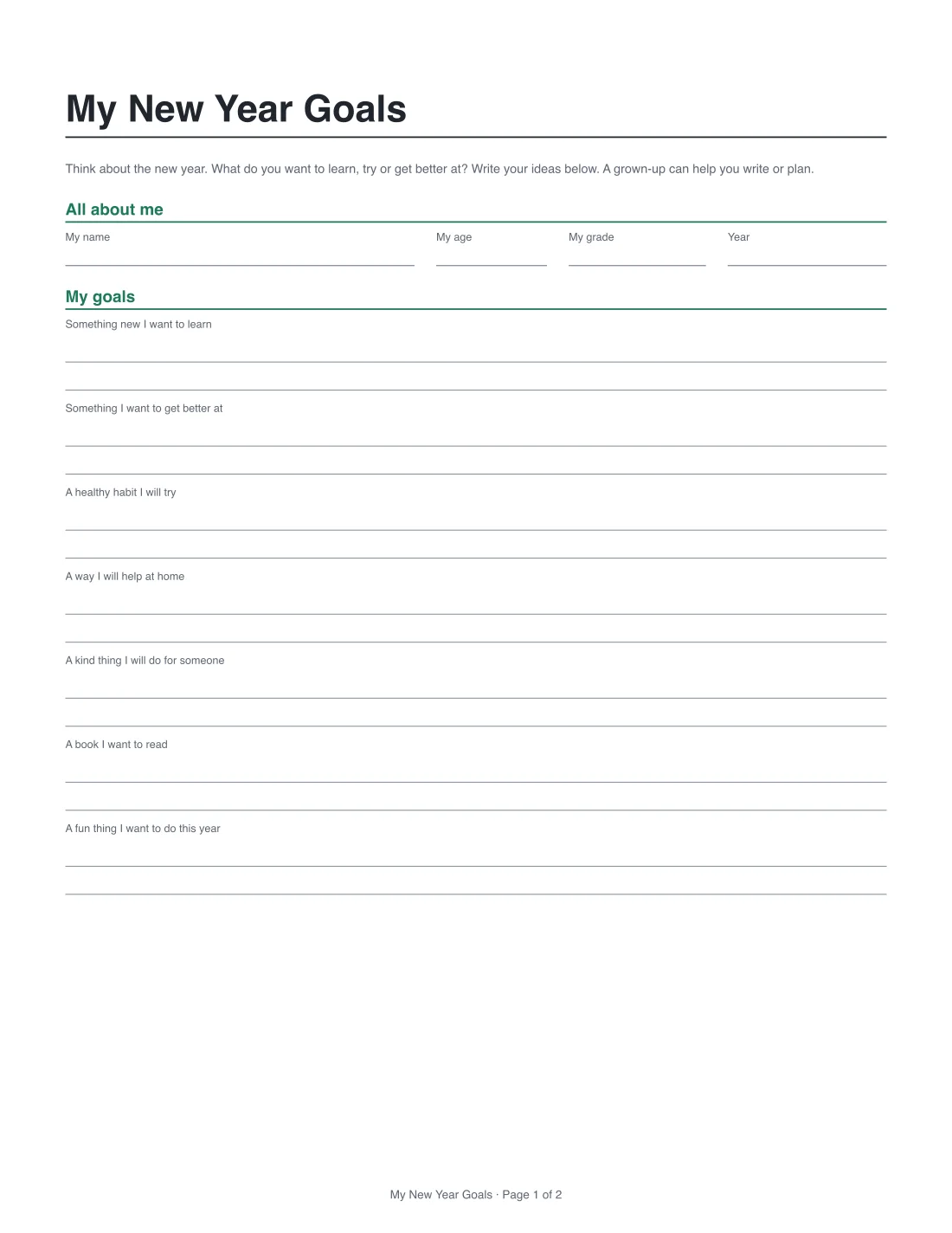
A kids version swaps the planning language for friendly prompts: something new I want to learn, a healthy habit I will try, a way I will help at home, a kind thing I will do, a book I want to read. Fill in either version on screen and download a Word file or PDF, or print it blank and fill it in by hand at the kitchen table.
How to print your new year resolution template
1. Choose a design
Classic boxes give each goal its own bordered section, Clean lines prints open lines that are easy to write on, and For kids uses simple prompts with roomy lines. Pick a color and keep the 12-month check-in page on or off.
2. Write goals you can measure
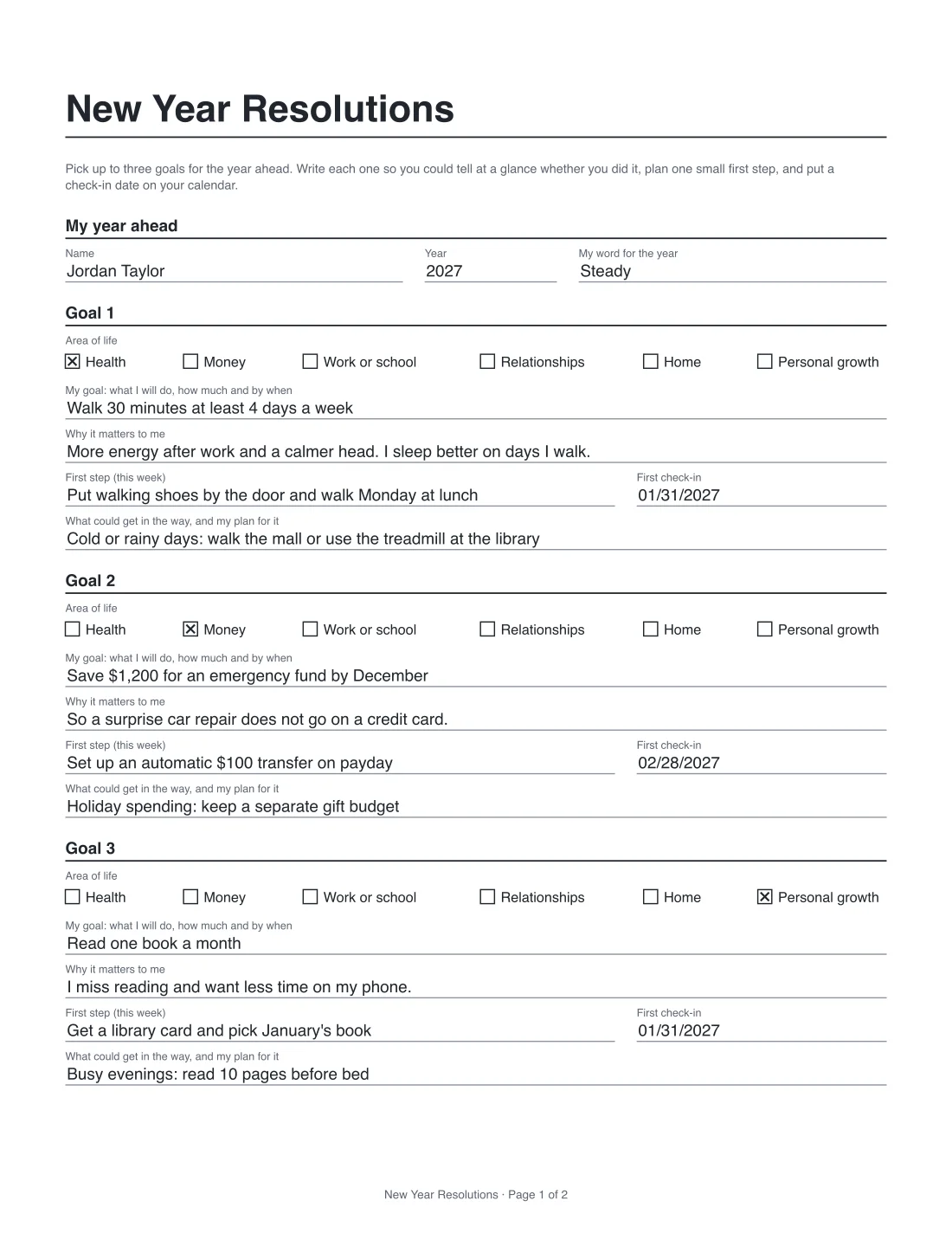
For each goal, tick the area of life and write what you will do, how much and by when ("walk 30 minutes four days a week"), why it matters to you, your first step this week and a check-in date. Name the obstacle you expect and how you will handle it.
3. Print it and check in monthly
Download the PDF or Word file, print it, and keep it where you will see it: on the fridge, in a planner or next to your desk. At the end of each month, fill in one row of the check-in table and adjust the plan.
How to write a resolution you will keep
- Make it specific and measurable: "read one book a month" instead of "read more", so you can tell whether you did it.
- Write down why: a personal reason ("more energy after work") keeps you going on the days the goal feels like a chore.
- Start small: the first step should take less than a week, like setting up an automatic transfer or putting your shoes by the door.
- Plan for the obstacle: "if it rains, I walk at the mall" is an if-then plan, and having one ready makes it easier to stay on track.
- Limit yourself to three: a few goals you care about beat a long list you forget by February.
- Schedule the check-ins: put a monthly reminder on your calendar so the review actually happens.
Goal ideas by area of life
| Area | Example goals |
|---|---|
| Health | Walk 8,000 steps a day, cook dinner at home four nights a week, go to bed by 10:30 on weeknights |
| Money | Build a $1,000 emergency fund, pay off one credit card, track every expense for 30 days |
| Work or school | Finish a certification, read one book in your field each quarter, raise a grade to a B |
| Relationships | Call a parent every Sunday, plan one date night a month, have friends over once a month |
| Home | Declutter one room a month, start a vegetable garden, finish the photo albums |
| Personal growth | Learn 500 words of a new language, volunteer twice a month, journal three times a week |
New Year goals for kids
Kids enjoy setting goals when they are concrete and a little fun. Sit down together in the first week of January, read the prompts out loud and let your child pick the ideas, even small ones like learning to tie their shoes or reading a chapter book. The check-in page has a row per month and space to color stars, which makes a quick monthly chat easy: what did you do toward your goals, and what do you want to try next?