HOW TO USE IT
About the lined paper
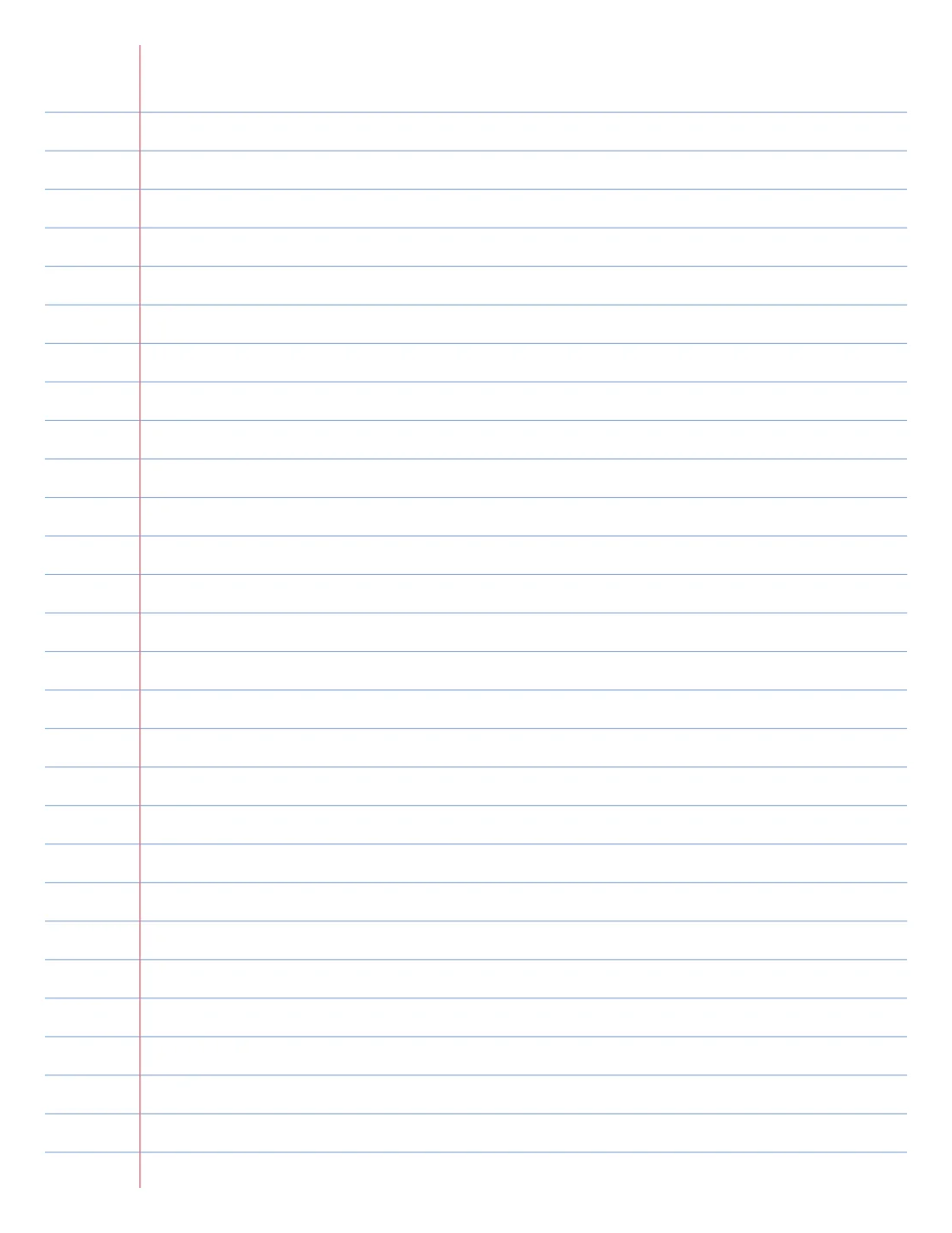
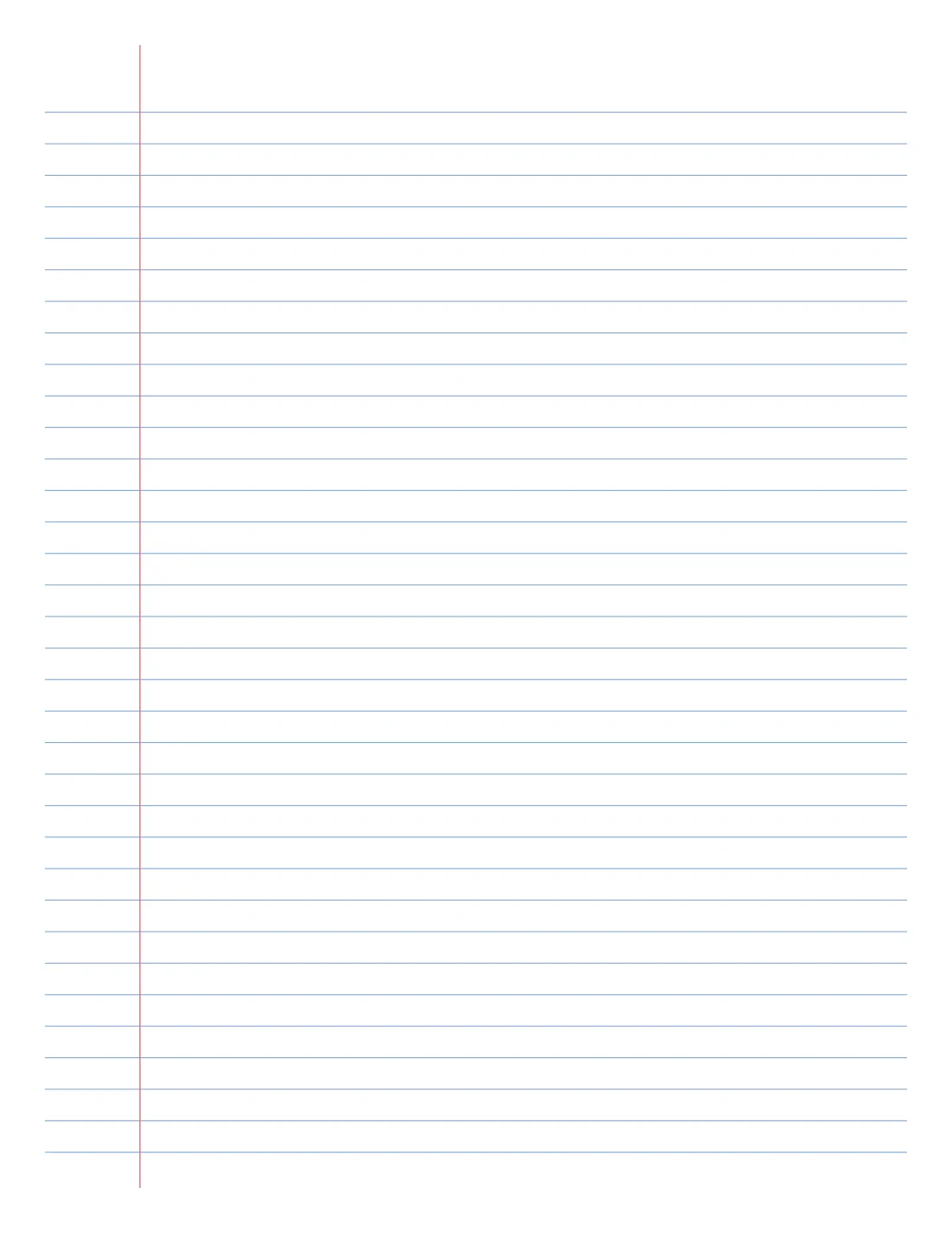
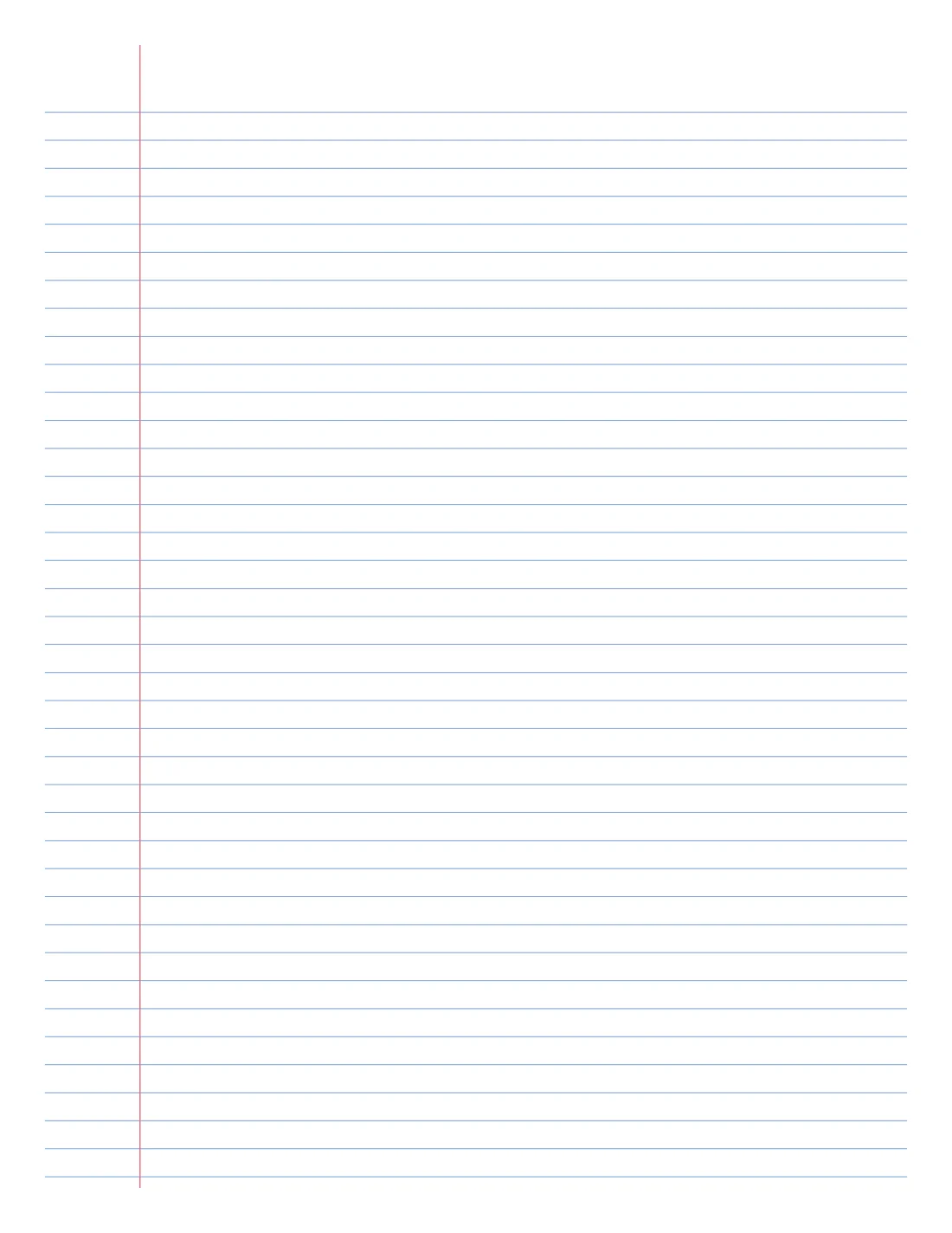
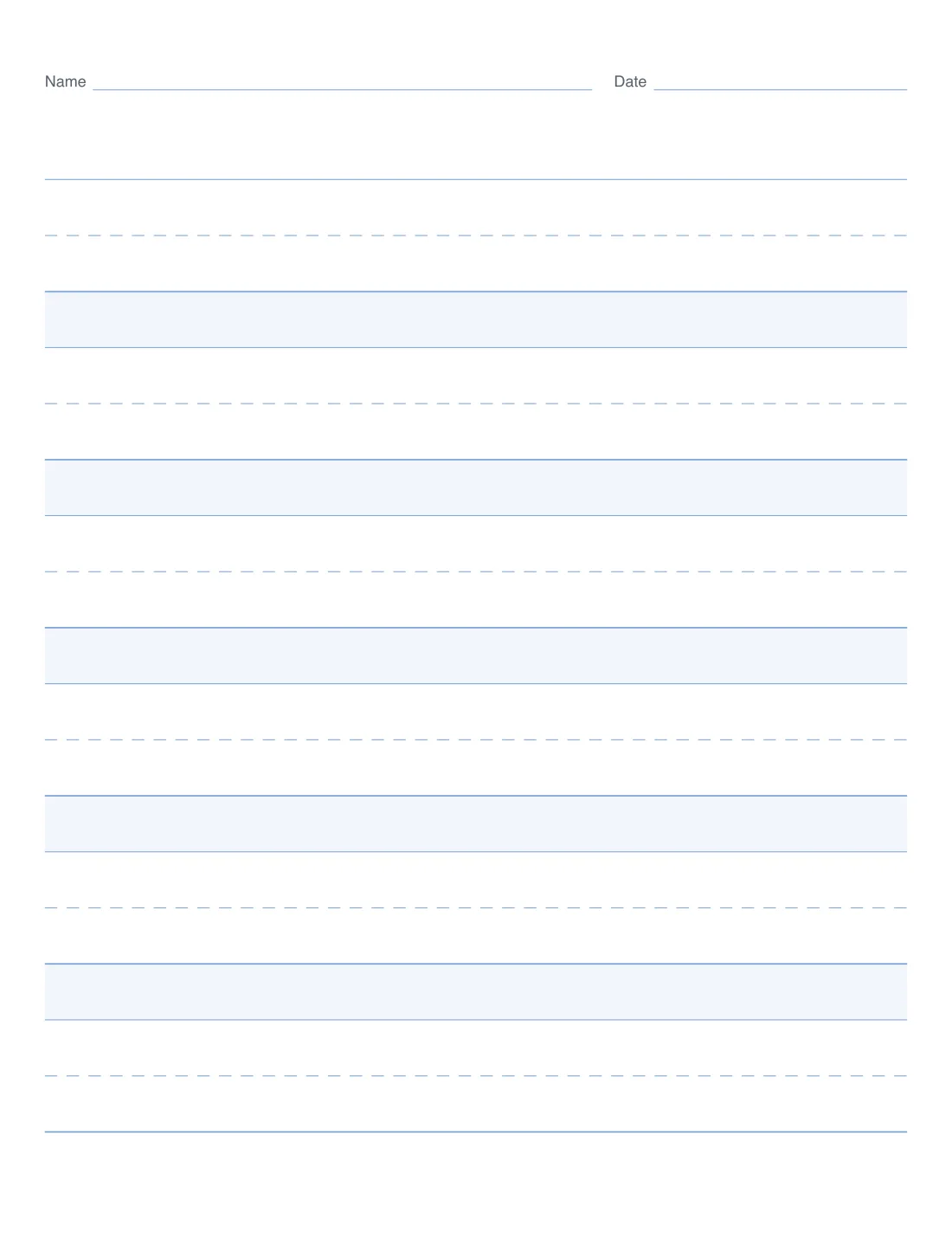
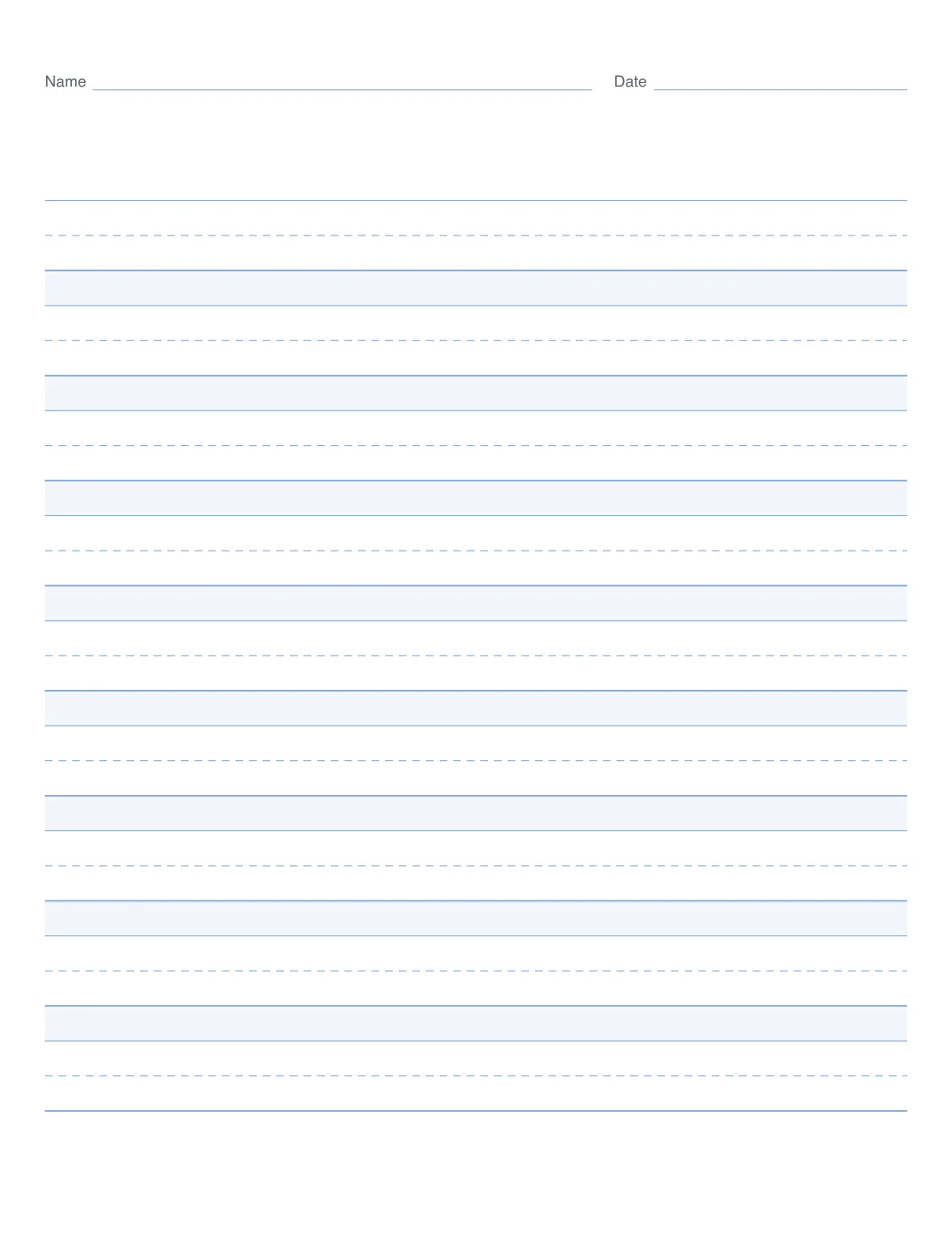
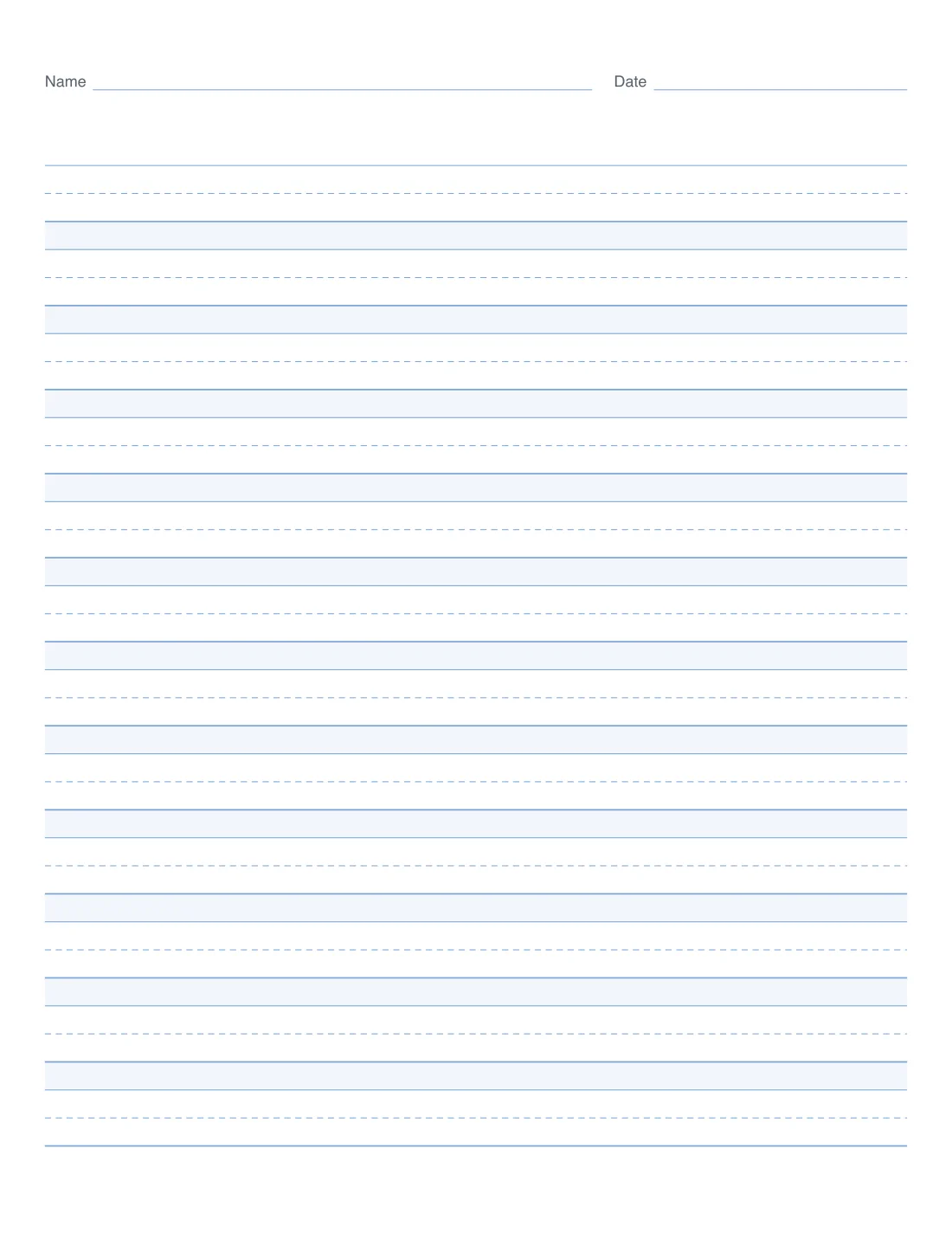
This printable lined paper comes in the six rulings people actually use: the three notebook rulings sold in the US (wide, college and narrow) and three sizes of primary handwriting paper with a dashed midline for children who are learning to form letters.
Pick a line style, choose US Letter or A4, and decide whether you want the red margin line and a name and date line at the top. The preview shows exactly what will print. Download a PDF for the sharpest lines, a PNG if you want to drop the sheet into another document or an app, or print straight from the page.
The lines are light blue by default, like loose-leaf filler paper, and you can switch to gray, black, green, purple or pink. Light colors guide the hand without competing with the writing and use very little ink.
How to print your lined paper
1. Choose a line style
Wide ruled suits elementary school, college ruled suits most teens and adults, and narrow ruled fits the most writing on a page. For young children, start with 1 inch primary rows and move down to 5/8 inch and 1/2 inch as their handwriting gets smaller.
2. Set the options
Pick Letter or A4, portrait or landscape, a line color, and whether to show the red margin line and the name and date line.
3. Download or print
Download the PDF or PNG after the short countdown, or press Print. Print one copy and check it before printing a stack.
4. Print at actual size
In the print dialog choose "Actual size" or 100% scale. "Fit to page" shrinks the sheet a few percent, which makes the lines slightly narrower than the true ruling.
Lined paper sizes explained
US notebook paper is described by its ruling, the distance from one line to the next. The numbers below are the exact spacing in this file, followed by how many lines fit on a US Letter sheet (8.5 x 11 in) and an A4 sheet without the name line.
Primary paper is measured differently: by the height of one writing row from the top line to the baseline. Each row has a dashed midline for lowercase letters and a half-row skip space below it for letters that hang below the line, such as g, j, p, q and y.
| Line style | Spacing | Lines or rows on Letter | Lines or rows on A4 | Typical use |
|---|---|---|---|---|
| Wide ruled | 11/32 in (8.7 mm) | 28 lines | 30 lines | Grades 2 to 5 |
| College ruled | 9/32 in (7.1 mm) | 34 lines | 37 lines | Middle school, high school, college, office |
| Narrow ruled | 1/4 in (6.35 mm) | 39 lines | 41 lines | Small handwriting, detailed notes |
| Primary, 1 in rows | 1 in rows, 1/2 in midline | 6 rows | 7 rows | Pre-K and kindergarten |
| Primary, 5/8 in rows | 5/8 in rows, 5/16 in midline | 10 rows | 11 rows | Kindergarten and first grade |
| Primary, 1/2 in rows | 1/2 in rows, 1/4 in midline | 13 rows | 14 rows | Second and third grade |
Which ruling for which grade
Schools set their own supply lists, but most follow the same progression. Children start on large primary rows because big letters are easier to control, then move to smaller rows as their fine motor skills improve. By second or third grade most students switch to wide ruled notebook paper, and college ruled usually appears on supply lists in middle school.
- Pre-K and kindergarten: 1 inch primary rows, often with the name line turned on.
- Kindergarten to first grade: 5/8 inch primary rows.
- Second and third grade: 1/2 inch primary rows, then wide ruled.
- Grades 3 to 5: wide ruled with the red margin line.
- Middle school and up: college ruled. Adults with small handwriting often prefer narrow ruled.
- Occupational therapy and handwriting practice at any age: whichever primary size makes letters comfortable, since the dashed midline helps with letter height.
Tips for printing lined sheets of paper
- Print a single test page and hold it against a sheet of store-bought notebook paper. The lines should match exactly when the print scale is 100%.
- Every file keeps at least 0.4 in of white space at the edges, so home printers do not cut off the lines.
- Light blue and gray lines save the most ink and stay readable when copied on a school copier.
- Landscape lined paper is handy for letters to grandparents, wide charts and handwriting strips for young children.
- For a binder, print on 24 lb paper or card stock and punch three holes along the left edge, outside the red margin line.
- To print a stack, print one sheet as a PDF and set the number of copies in the print dialog rather than downloading the file many times.